EΣΠΑ

untitled (1920 x 300 px) (1920 x 600 px)

Proper Wire Rope care is essential for ensuring safety, performance, and long-term value. Regular inspection and maintenance help prevent accidents and costly equipment failures by identifying wear, corrosion, or damage before they become critical issues. Proper care also significantly extends the operational lifespan of the rope, maximizing your investment and reducing the frequency of replacements. This leads to substantial cost savings over time while maintaining optimal efficiency. Moreover, adhering to recognized standards such as EN 12385, ISO 4309, and MEG4 ensures full compliance with industry regulations, protecting both personnel and operations.

In short terms the importance on a Proper Wire Rope Care is for:

  • Safety: Prevents accidents and equipment failure
  • Lifespan: Extends operational use
  • Cost savings: Reduces replacements
  • Compliance: EN 12385, ISO 4309, MEG4

Inspection Practices
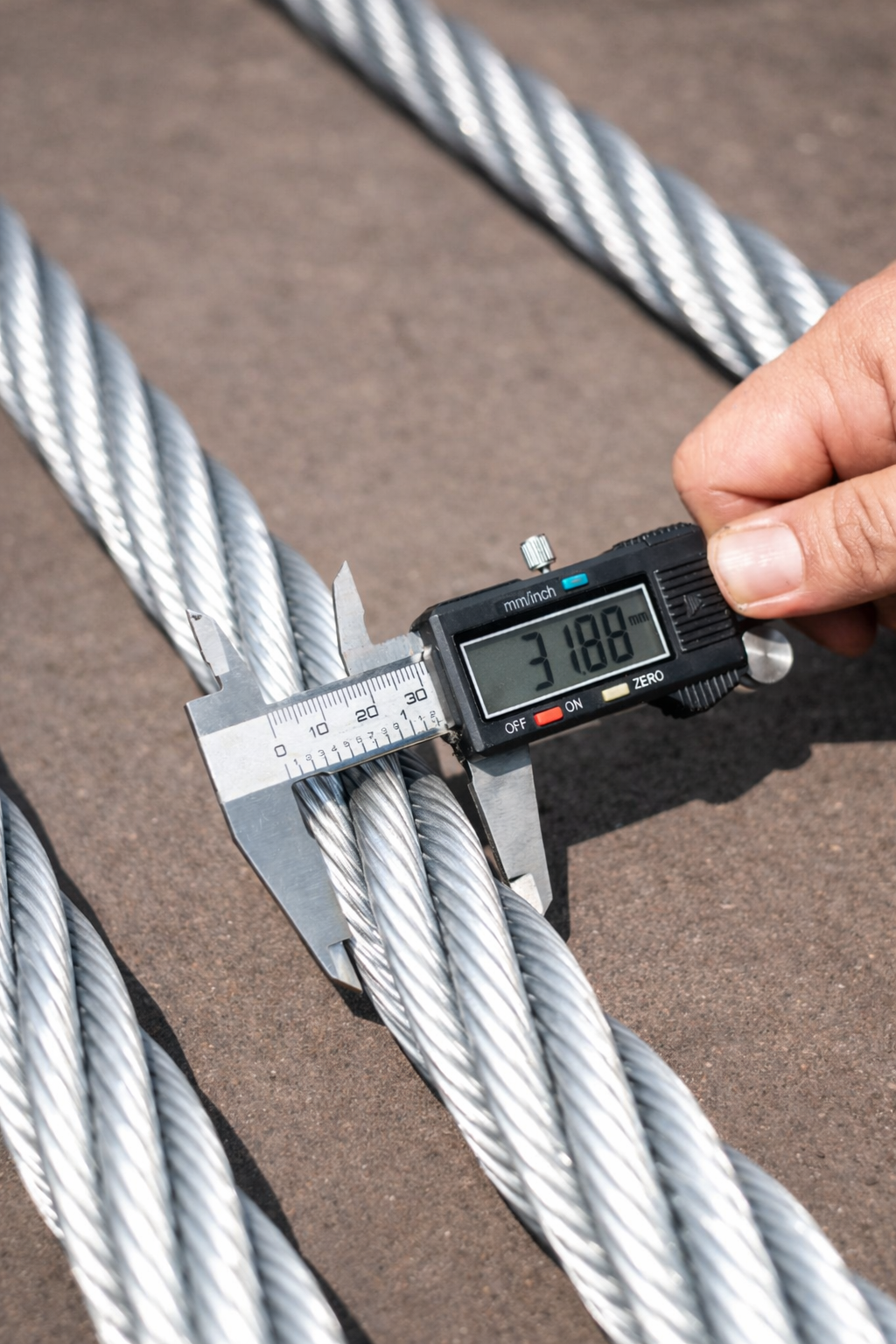
chatgpt image 19 Φεβ 2026, 11 18 41 π.μ.Any Wire Rope that has broken wires, deformed strands, variations in diameter or any change from its normal appearance must be considered for replacement. It is always better to replace a rope when there is any doubt concerning its condition or its ability to perform the required task. The cost of wire rope replacement is quite insignificant when considered in terms of human injuries,
the cost of down time, or the cost of replacing broken structures.

Wire rope inspection includes examination of basic items such as:

  • Rope diameter differentiations
  • Rope lay
  • External wear
  • Internal wear
  • Peening
  • Scrubbing
  • Corrosion
  • Broken wires

Regular Wire Rope inspections are essential to maintaining safety and performance throughout its service life. Visual checks should be carried out before use, during operation, after use, and periodically as part of a scheduled maintenance routine. The rope must be replaced if the number of broken wires exceeds the allowable limits within a 6d or 30d length, or if visible damage such as birdcaging, doglegs, popped core, or other deformations is detected. In cases of complete strand failure, the rope must be discarded immediately. For detailed discard criteria and inspection guidelines, always refer to ISO 4309 and MEG4 standards, or contact our company for expert guidance and support.

Procedures for Testing of used Wire Ropes
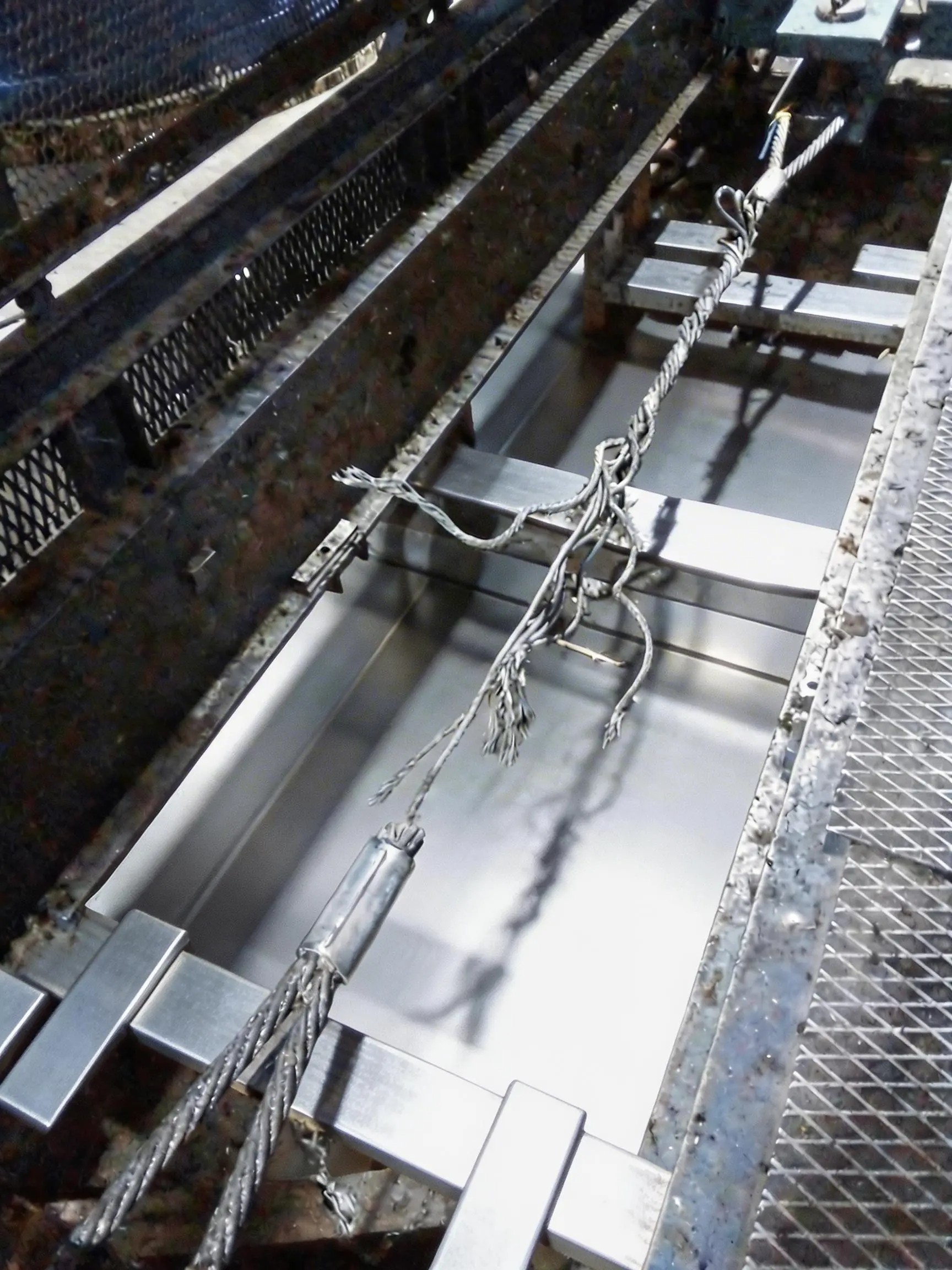
machine floor metall

Prerequisites

In order to extract accurate and reliable results, the Client who requests the forensic report, should provide to KATRADIS the certificate of the subject wire rope and if available the total mooring hours and photos from the wire rope on-board.

Visual inspection

The Wire rope should be inspected and results logged for any local damages that can be identified visually as per the supplie’s guidelines for visual inspection.

Destructive test for used ropes (MEG4) at KATRADIS facilities

For determining the residual strength of the wire, a destructive (break) test can be performed. This test can never be considered as a quality / usage level for the rest wire rope length from wich the specific specimen was cut.




Storage Best Practices

Proper storage of wire ropes is essential to prevent premature deterioration and maintain their performance. Wire Ropes should always be stored under cover or in weatherproof conditions to protect them from moisture and corrosion, while avoiding exposure to chemicals, acid fumes, steam, or heat sources that can compromise their integrity. For long-term storage, reels should be covered with protective cloth and generously lubricated to preserve flexibility and prevent internal corrosion. Used ropes must be thoroughly cleaned, re-lubricated, and stored in the same manner as new ropes to ensure they remain in optimal condition for future use.

For a simplier understanding for the best Practices to store your Wire Ropes you have to:

  • Store the ropes under cover, avoid moisture & chemicals
  • Keep away from heat sources
  • Lubricate the wires before long-term storage

Lubricant Application

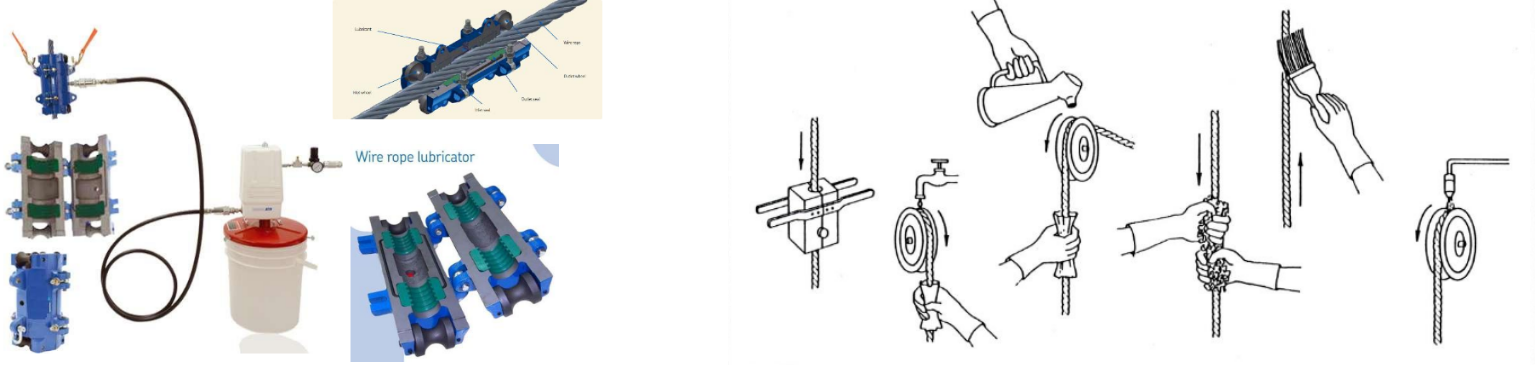
Proper lubrication is essential for reducing friction and protecting wire ropes against corrosion. During production, each rope undergoes intensive lubrication to minimize internal friction between its elements and external friction between the rope and sheaves or drums, while also providing initial corrosion protection. However, this factory-applied lubrication has a limited lifespan and gradually wears off under operating and environmental conditions. To maintain optimal performance and extend service life, lubrication must be periodically re-applied. For best results, a pressure lubricator is recommended to ensure deep and even penetration—manual application methods are not advised.

wire ropes presentation

*Wire rope Pressure Lubrication System                                                                   *Manual re-lubrication – not recommended

When to Discard a Rope

Wire rope replacement should be based on the number of visible broken wires and the level of corrosion, in accordance with EN 12385-3, ISO 4344, and ISO 4309 standards. The following criteria outline when a rope must be discarded:

🔹 Broken Wirescopy of copy of vectran kataxorisi 2 (1)

Replace the rope if:

  • There are 4 or more broken wires over 6d length (for 6x36WS + IWRC / 6x41WS + IWRC).
  • There are 8 or more broken wires over 30d length.
  • Two or more valley wire breaks appear within one lay length (≈6d).
  • Two or more broken wires at the termination are found.
  • Broken wires are grouped in one or two strands, even if total limits are not exceeded.
  • There is a complete strand failure (immediate discard).

🔹 Corrosion

Replace the rope if you notice:

  • Heavy external corrosion, deep pitting, or slack wires.
  • Visible internal corrosion, such as rust debris coming out between strands.
  • Fretting corrosion (red powder between wires caused by friction).
  • Any corrosion condition that raises safety concerns — when in doubt, discard.


Maintenance Essentials

Proper maintenance is key to maximizing wire rope safety and service life.

  • Clean and Inspect Regularly:
    Keep ropes free from dirt, debris, and buildup to allow accurate visual inspections and prevent premature wear. Regular cleaning helps extend the rope’s lifespan.

  • Avoid Shock Loading and Over-Tensioning:
    Sudden or excessive loads can cause both visible and hidden damage, weakening the rope’s structure and leading to early failure. Always operate within the recommended load limits.

  • Remove Broken Wires Safely:
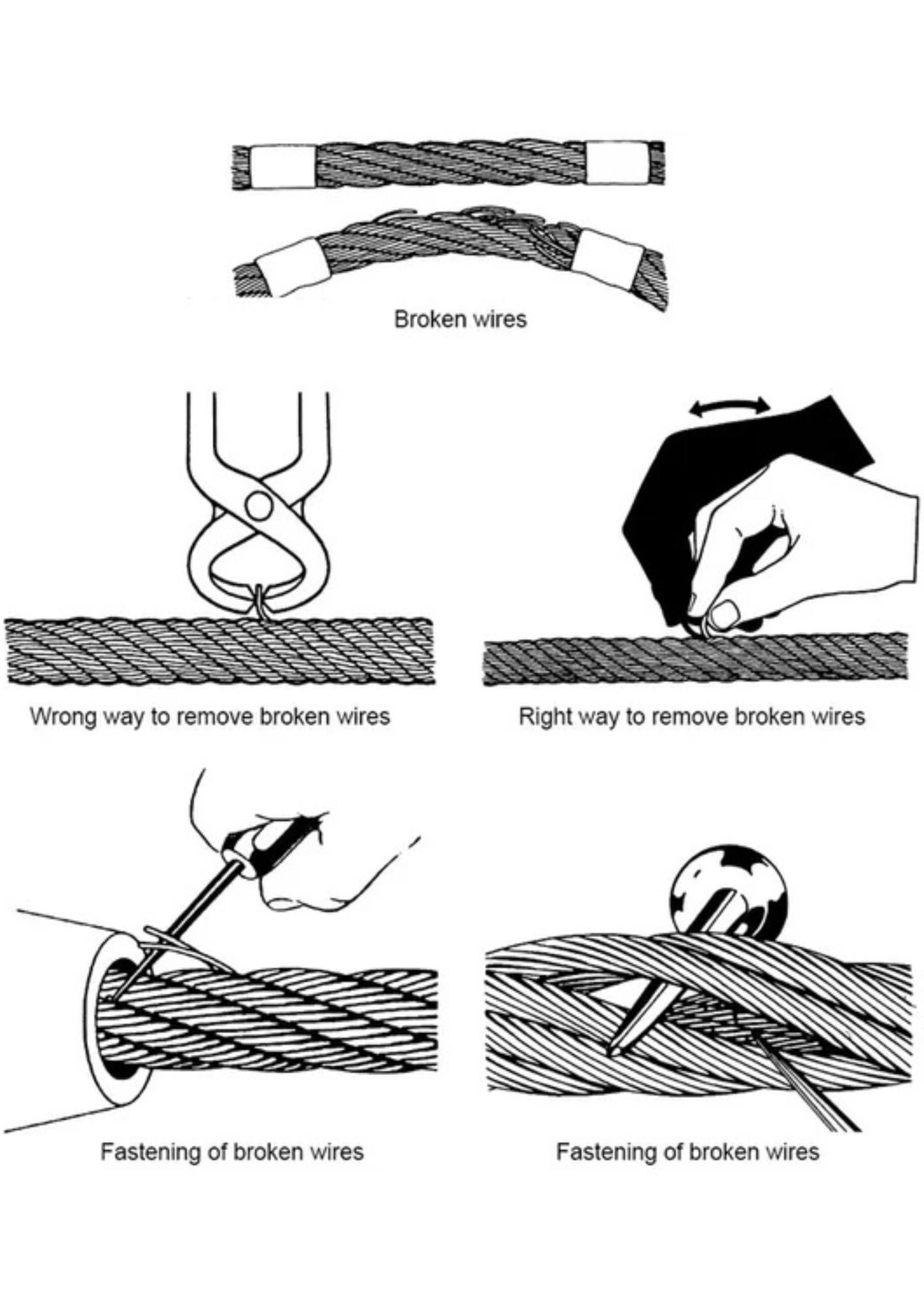
    Do not cut broken wires with nippers. Instead, bend the wire ends back and forth until they break deep between the strands. This prevents damage to adjacent wires and reduces the risk of injury to personnel.


Contact Us